
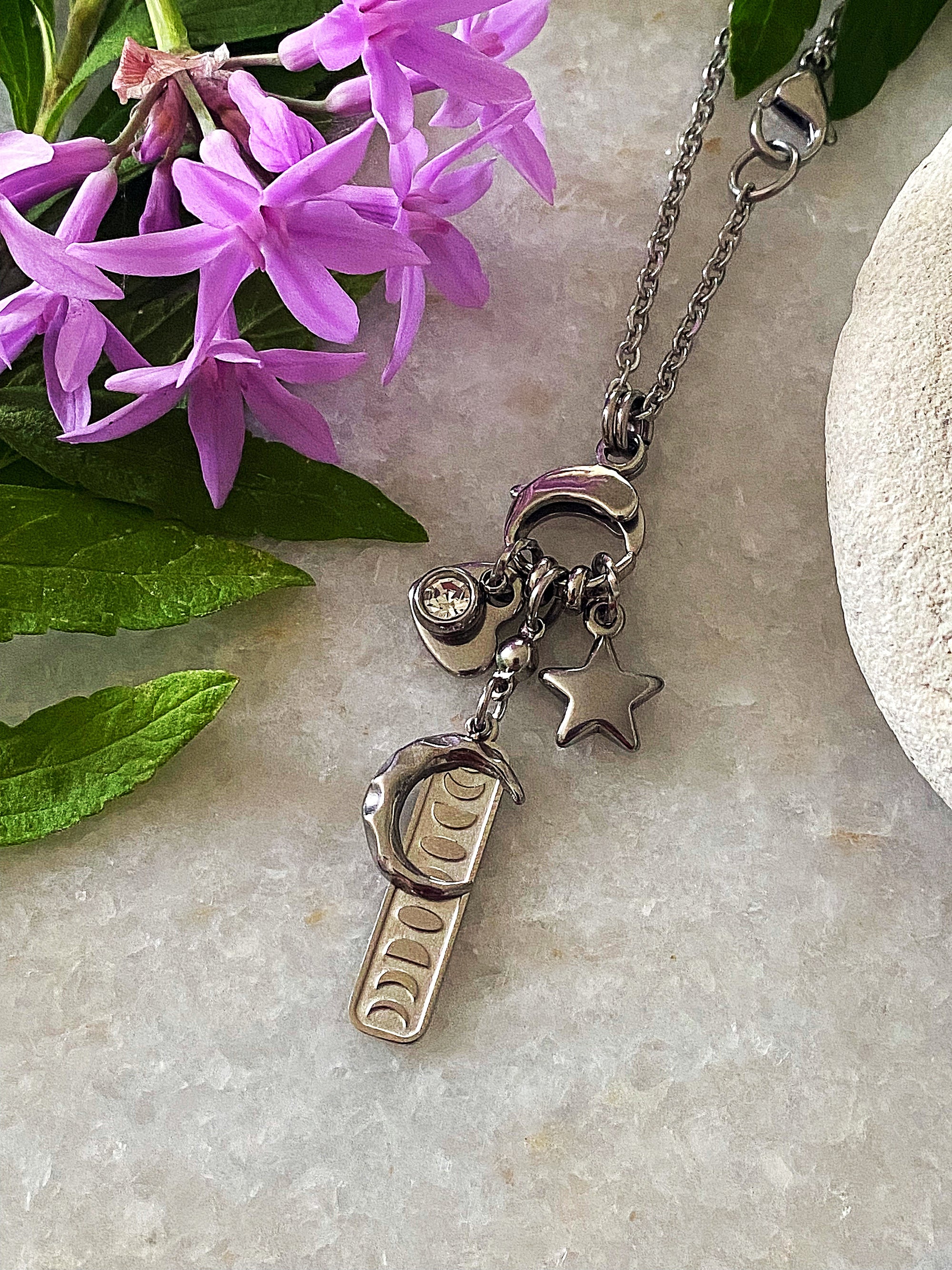
That black film on your sterling silver isn't dirt and isn't damage. It's silver sulfide — silver atoms reacting with sulfur in your skin oils, in cooking smoke, in tap water, and in the air itself. Here's how to slow that reaction down.
What tarnish actually is
Sterling silver tarnishes through a chemical reaction with sulfur compounds. Hydrogen sulfide (H₂S) and other sulfides in ambient air react with surface silver atoms to form silver sulfide (Ag₂S), which is the black film you see. The reaction happens whether you're wearing the piece or not — humid air contains enough sulfur from biological decay to oxidize stored silver over months.
Stainless steel doesn't tarnish (the chromium content forms a passive oxide layer that prevents further reaction). Gold doesn't tarnish for the same reason — but gold-fill can wear through to the brass core, which CAN tarnish. So tarnish is a sterling silver problem and an aged-gold-fill problem; pure stainless and pure gold are immune.
What accelerates tarnish
- Skin oils high in sulfur (varies person-to-person — some bodies tarnish silver in days, some in years)
- Hairspray, perfume, lotion, sunscreen applied directly over jewelry
- Pool chlorine and ocean salt water — both accelerate the reaction
- Cooking smoke (especially from sulfur-containing foods like eggs, onions, garlic)
- Wool, latex, and rubber — sulfur-rich materials touching jewelry transfers compounds
- Humid storage — bathroom counters, basement drawers, anywhere over 60% humidity
What slows it down
Three storage techniques cut tarnish rates by ~5x: (1) anti-tarnish strips (Pacific Silvercloth, 3M Anti-Tarnish) inside the storage container — the strips absorb sulfur faster than the silver does; (2) airtight storage in zip-lock bags with the air pressed out — denies the silver oxygen and sulfur exposure; (3) silica gel packets — drop the humidity below 40% and the reaction rate drops 80%.
The single most effective combination: each piece in its own zip-lock with one anti-tarnish strip and one silica packet, stored in a wood drawer (not a bathroom). Some people swear by chalk dust or activated charcoal in the drawer; both work, both make a mess. The brand recommends the cleaner zip-lock approach.
How to remove tarnish when it appears
Light tarnish (gray film, not black): a polishing cloth specifically labeled for silver (Sunshine cloth, Hagerty's, 3M anti-tarnish cloth). Rub gently; don't use household abrasives, which scratch. The cloth should turn black; the silver should shine.
Heavy tarnish (deep black film): the aluminum-foil-and-baking-soda method works on uncomplicated pieces. Line a glass dish with foil shiny-side up, fill with hot water and 1 Tbsp baking soda + 1 Tbsp salt, drop the silver in (must touch the foil). The chemistry is real (galvanic-cell reduction); the foil takes the sulfur back from the silver. Warning: don't use this method on pieces with pearls, opals, turquoise, glued stones, or vermeil — the alkaline solution damages all of those. Use a polishing cloth on those pieces instead, or take them to a jeweler for ultrasonic cleaning.
What about Bellaforma's stainless components?
The stainless components don't tarnish at all. The chains, clasps, ear posts, and jump rings stay bright across decades of wear. If a Bellaforma piece develops a dull patina, it's almost always on the sterling or gold-fill decorative elements — not on the structural stainless. A polishing cloth on the affected sections restores it without affecting the stainless.
Sources & citations
- ASM International. "Corrosion of Silver and Silver Alloys" (2018). asminternational.org
- Smithsonian Conservation Institute. "Care of Silver Objects." si.edu/mci
- GIA. "Tarnish: causes and prevention." gia.edu
- Society of American Silversmiths. "Care and Cleaning Guide." silversmithing.com
Frequently asked
What does "How to Keep Your Jewelry From Tarnishing (And What to Do When It Does)" cover?
This piece walks through the topic, context, and practical implications laid out in the article body above — focused on giving you a clear, sourced read rather than a quick listicle. Use it to deepen your understanding of the brand, category, or product family discussed.
Who is this article written for?
Readers shopping the brand or category covered, plus curious browsers researching independent makers stocked at Curated Sense. Both casual shoppers and trade buyers will find the same source-linked perspective.
How does Curated Sense vet the brands featured in journal articles?
Every brand in our journal has been onboarded directly: live inventory sync with the brand's own catalog, links back to the maker's own .com, and quality checks against return-rate, fulfillment-time, and customer-message-volume thresholds. We don't run sponsored placements in our journals.
Where can I shop the products discussed in this article?
Open the brand's collection or sub-collection page linked above to see current stock. Each product card opens a full Curated Sense product page with sizing, materials, the maker's own description, and the brand's live shipping policy.

