
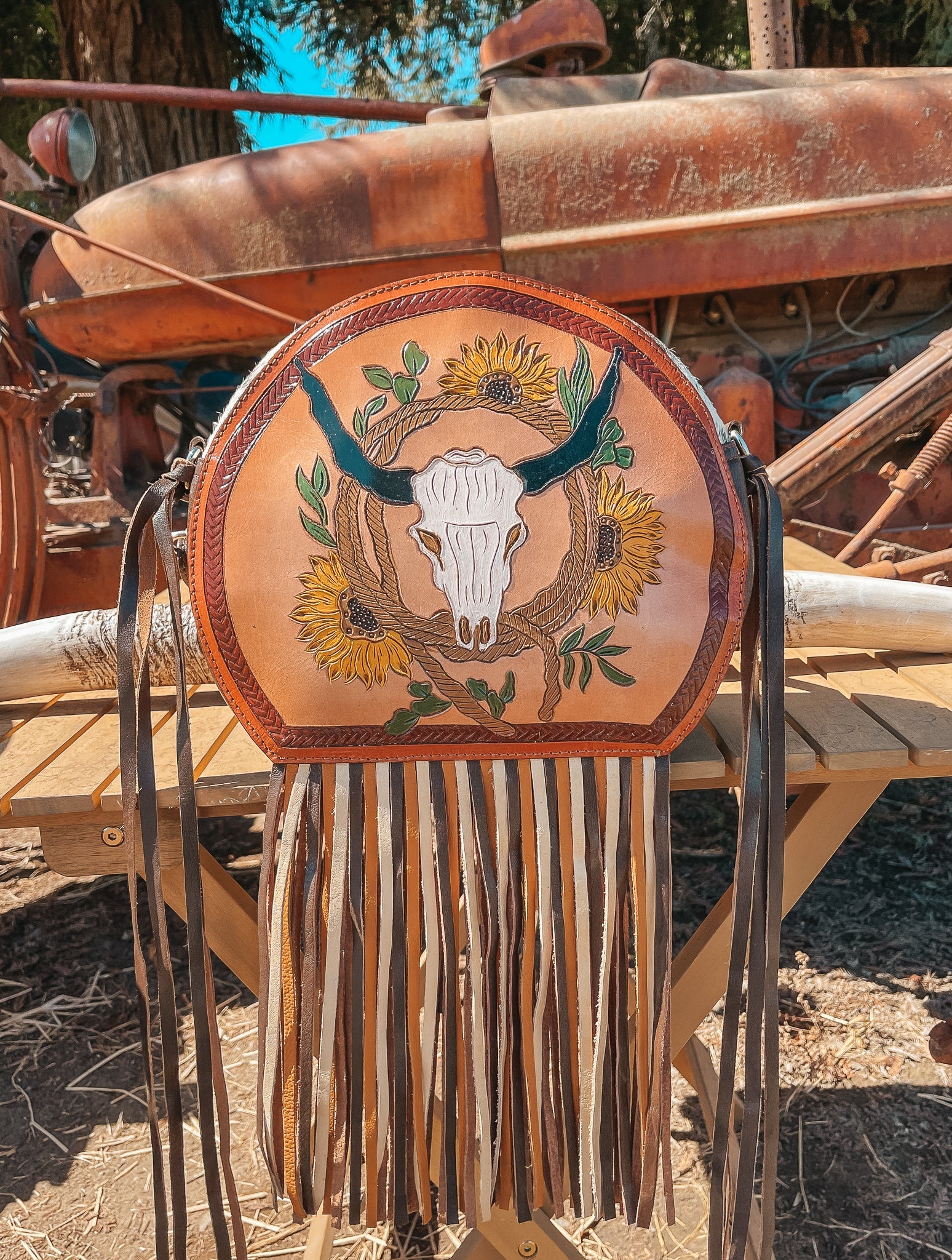
Western fashion has been declared 'over' by trend-watchers in 1985, 1996, 2003, 2010, and 2017. Each time, it returned within five years. The reason is that western dress isn't a trend — it's a periodic re-discovery of clothing that was originally designed to work.
Phase one: occupational origins, 1820–1900
The garments most associated with western fashion all originated as working clothes. The cowboy hat — invented by John B. Stetson in 1865 — solved practical problems: wide brim shielded sun, tall crown insulated against cold, the felt was waterproof. The pointed-toe boot allowed quick stirrup entry; the higher heel kept the boot in the stirrup. Denim jeans (patented by Levi Strauss + Jacob Davis in 1873) were riveted at stress points to survive cattle drives.
These items were workwear for ~50 years before becoming fashion. The transition happened gradually as eastern Americans began visiting western dude ranches in the 1910s and 1920s, bringing the look home as souvenir-style.
Phase two: Hollywood-driven mainstream, 1930s–1950s
Singing-cowboy films of the 1930s and 1940s (Gene Autry, Roy Rogers, Hopalong Cassidy) dramatically altered what western clothing looked like — they introduced rhinestones, embroidered yokes, fringe, contrasting yokes, and inlaid leather designs that no working cowboy ever wore. The brand Nudie's Rodeo Tailors in North Hollywood (1947) outfitted Roy Rogers, Hank Williams, Elvis Presley, and the Flying Burrito Brothers in increasingly elaborate pieces.
By the 1950s, 'western wear' as a fashion category was firmly established — and importantly, it was now decoupled from actually riding horses. Suburban kids wore cowboy hats; teenage girls wore prairie skirts; the work-origin became aesthetic-origin.
Phase three: counter-culture and rodeo-revival, 1970s
The 1970s 'urban cowboy' phenomenon (peaking with the John Travolta film of the same name in 1980) was the first major mainstream-fashion crossover for western clothing. It was deliberately retro — looking back to the silver-screen cowboy era while embedded in disco-era urban America. Boot-cut jeans returned as fashion items; pearl-snap shirts left ranches and entered Manhattan boutiques.
In parallel, the rodeo-circuit fashion of the 1970s established its own aesthetic — boot-stitch print, turquoise-and-silver concha jewelry, fringe, suede — that Whiskey Black & Co's Lucky & Blessed apparel collab references directly today.
Phase four: continuous-revival cycle, 2018–present
Western fashion has been in a continuous mainstream cycle since approximately 2018, driven by Yellowstone (2018-present), the broader country-music popularization through streaming, the cottagecore aesthetic adoption of cowboy boots, and Beyoncé's Cowboy Carter album (2024). Unlike previous cycles, this one has stayed mainstream for 7+ years rather than the typical 18-30 month fashion cycle.
The reason this cycle hasn't ended: it's hybridized with adjacent aesthetics rather than competing with them. Western dressing in 2026 mixes with athleisure (cowboy boots + leggings), with luxury (turquoise + designer denim), with curvy and plus-size inclusive movements (Lucky & Blessed and similar brands), and with regional pride (Texas vs Wyoming vs Montana subspecies). The category has stopped being a trend and become a permanent style vocabulary.
Western dress survives because it solved real problems first — and any clothing that survived a thousand cattle drives can survive a fashion cycle.
Sources & citations
- Wills, J. (2009). The Western Frontier: A Cultural History. University of Nebraska Press.
- Stetson, J. B. Hat Company historical archives. stetson.com/our-story
- National Cowboy & Western Heritage Museum, Oklahoma City, OK.
- Cohn, N. (1980). Urban Cowboy production materials and cultural-context essays.
- Vogue Business. "The Western Cycle, Year Seven" (2024).
Frequently asked
What does "A Short History of Western Fashion: From Working Wear to Style Statement" cover?
This piece walks through the topic, context, and practical implications laid out in the article body above — focused on giving you a clear, sourced read rather than a quick listicle. Use it to deepen your understanding of the brand, category, or product family discussed.
Who is this article written for?
Readers shopping the brand or category covered, plus curious browsers researching independent makers stocked at Curated Sense. Both casual shoppers and trade buyers will find the same source-linked perspective.
How does Curated Sense vet the brands featured in journal articles?
Every brand in our journal has been onboarded directly: live inventory sync with the brand's own catalog, links back to the maker's own .com, and quality checks against return-rate, fulfillment-time, and customer-message-volume thresholds. We don't run sponsored placements in our journals.
Where can I shop the products discussed in this article?
Open the brand's collection or sub-collection page linked above to see current stock. Each product card opens a full Curated Sense product page with sizing, materials, the maker's own description, and the brand's live shipping policy.

