
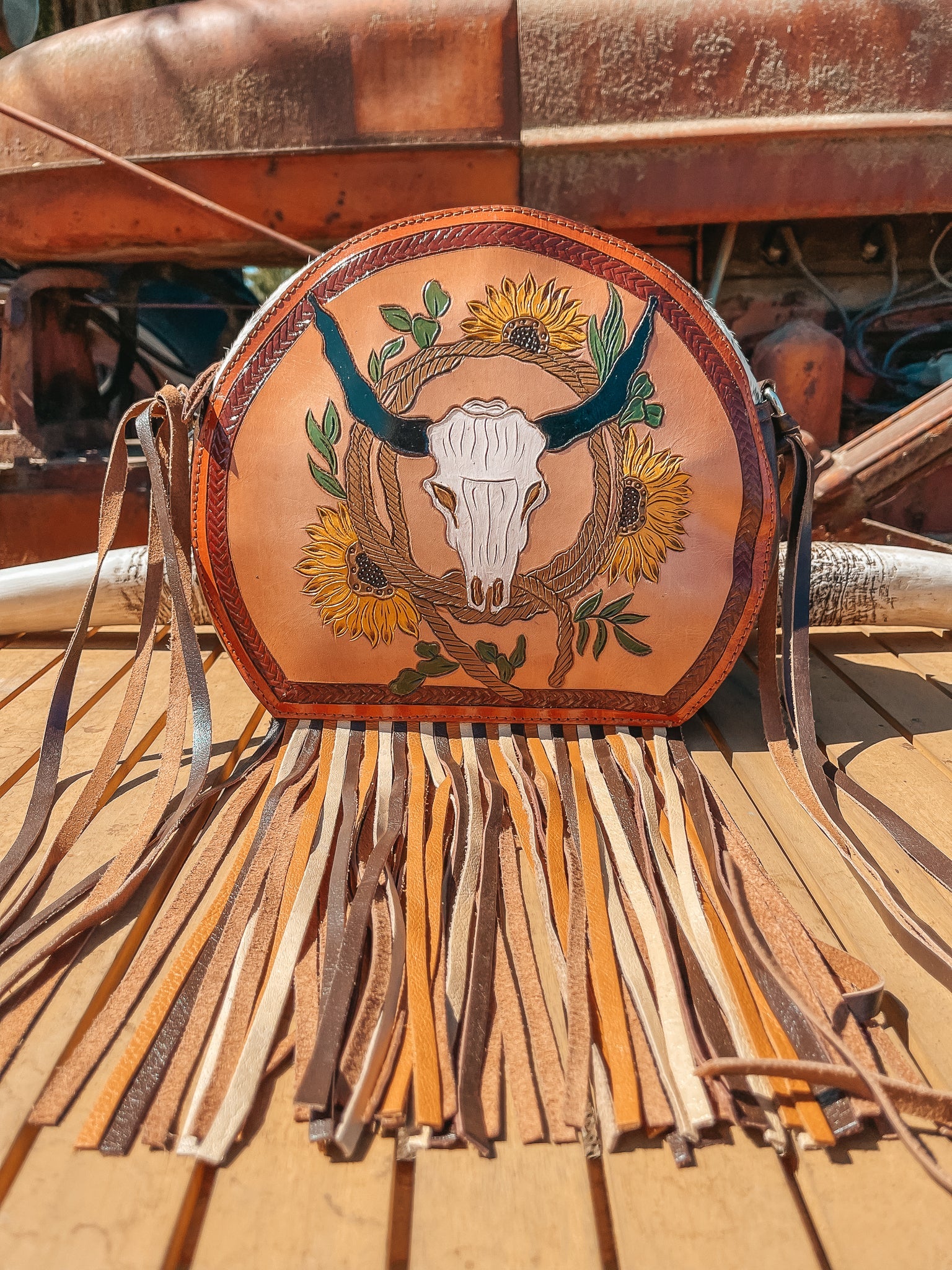
That carved oak-leaf saddle you saw at the rodeo is probably 25 years old. The hand-tooling, the dye, the structural integrity — all of it survives because someone runs the same six-step care routine every few weeks. Here's that routine.
Why hand-tooled leather needs more care
Hand-tooling carves designs (oak leaves, basket-weave, floral scrolls) into the leather surface using metal stamps and swivel knives. Those tooled lines are also where dye accumulates, where dust collects, and where moisture penetrates faster than smooth surfaces. Without care, a tooled piece loses its dye-contrast and looks washed-out within 5-7 years; with care, the contrast deepens and the piece looks better at 30 years than at year one.
The 6-step monthly routine
- Brush — soft-bristle horsehair brush over all tooled surfaces, working dust out of carved lines (do this weekly for daily-use pieces)
- Wipe — slightly damp cloth (water only, never soap or detergent) over the smooth sections to lift surface dirt
- Dry — air dry 30 minutes before conditioning; never use heat or direct sun
- Condition — Bick 4, Lexol, or pure neatsfoot oil applied with a clean cloth in light circular motions; let it absorb for 10-15 minutes
- Buff — clean dry cloth in firm strokes to remove excess conditioner and bring up the shine on smooth surfaces
- Inspect — check stitching for loose threads, hardware for tightness, dye for fade spots; small repairs are cheap, big repairs are expensive
What conditioner to use
Pure neatsfoot oil — Traditional, deeply penetrating, will darken light leathers significantly. Use sparingly on heritage pieces. Avoid synthetic 'neatsfoot oil compound' products, which contain mineral oil and degrade leather over time.
Bick 4 — Modern conditioner with mink oil and silicone. Doesn't darken as much as neatsfoot. Most working ranchers' default. Reapply every 4-6 weeks for daily-use pieces.
Lexol — Water-based conditioner. Easiest on the surface, doesn't darken much, but doesn't penetrate as deeply. Best for show tack and display pieces.
What to avoid: saddle soap (it's actually a cleaner, not a conditioner — over-use strips natural oils), petroleum jelly (clogs pores and breeds mildew), olive oil or other food oils (rancid breakdown over time).
What to never do
Don't store leather wet. If a piece gets caught in rain, towel-dry it immediately and condition within 24 hours. Leather that dries in a damp climate molds; mold doesn't come out without a re-dye and re-condition cycle.
Don't store leather in plastic. Plastic traps moisture against the surface and can leach plasticizers into the leather. Use breathable cotton dust covers for long-term storage.
Don't store in direct sun. UV breaks down dyes faster than any other single factor. Tack rooms have low light for a reason.
Don't fold tooled leather. Always hang on tack hooks or store flat. Fold creases lose dye contrast permanently and can crack tooling lines.
Sources & citations
- American Equestrian Trade Association. "Care and Maintenance of Western Tack." aeta.us
- Smithsonian Institution Conservation Lab. "Leather Care Guide for Cultural Heritage Objects." si.edu/mci
- Hidecrafter Leathercraft. "Hand-Tooling Care Specifications." hidecrafter.com
- Tandy Leather Foundation. "Leather Conservation Guide for Working Tack." tandyleather.com
Frequently asked
What does "How to Care for Hand-Tooled Western Leather (And Why It Lasts 30+ Years)" cover?
This piece walks through the topic, context, and practical implications laid out in the article body above — focused on giving you a clear, sourced read rather than a quick listicle. Use it to deepen your understanding of the brand, category, or product family discussed.
Who is this article written for?
Readers shopping the brand or category covered, plus curious browsers researching independent makers stocked at Curated Sense. Both casual shoppers and trade buyers will find the same source-linked perspective.
How does Curated Sense vet the brands featured in journal articles?
Every brand in our journal has been onboarded directly: live inventory sync with the brand's own catalog, links back to the maker's own .com, and quality checks against return-rate, fulfillment-time, and customer-message-volume thresholds. We don't run sponsored placements in our journals.
Where can I shop the products discussed in this article?
Open the brand's collection or sub-collection page linked above to see current stock. Each product card opens a full Curated Sense product page with sizing, materials, the maker's own description, and the brand's live shipping policy.

