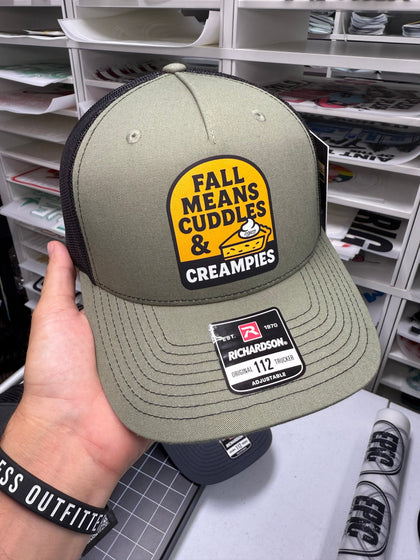
Print-on-demand (POD) means the garment is printed only after the customer orders it. The brand maintains designs digitally; the print partner stocks blank garments (Bella + Canvas, Gildan, ITC, etc.); the order triggers an immediate production run of one piece. The garment is decorated, packaged, and shipped from the print partner's facility — typically 5–8 business days from order to porch. The model trades production speed for inventory flexibility: a brand can list 250 SKUs without holding 250 SKUs in a warehouse. Per the Specialty Graphic Imaging Association's 2024 report, US POD revenue exceeded $7.4B in 2023, with country-apparel and pop-culture-graphic categories leading growth.
The print-on-demand model in one paragraph
Print-on-demand (POD) means the garment is printed only after the customer orders it. The brand maintains designs digitally; the print partner stocks blank garments (Bella + Canvas, Gildan, ITC, etc.); the order triggers an immediate production run of one piece. The garment is decorated, packaged, and shipped from the print partner's facility — typically 5–8 business days from order to porch. The model trades production speed for inventory flexibility: a brand can list 250 SKUs without holding 250 SKUs in a warehouse. Per the Specialty Graphic Imaging Association's 2024 report, US POD revenue exceeded $7.4B in 2023, with country-apparel and pop-culture-graphic categories leading growth.
The four garment blanks that dominate the category
Almost every POD country tee in 2026 is printed on one of four blank manufacturers. Bella + Canvas (Los Angeles, vertically integrated, ~$200M annual revenue) supplies the BC3001 unisex jersey tee — the fashion-tee gold standard, 4.2 oz/yd², semi-fitted. Gildan (NYSE: GIL, $3.2B 2023 revenue) supplies the G18500 heavyweight hoodie — 8 oz/yd² 50/50 cotton-poly fleece, the most-printed hoodie in North America. Independent Trading Co. (Vista, CA, premium fleece program) supplies the SS4500 midweight hoodie — 8.5 oz/yd² ringspun cotton blend, slightly softer hand than Gildan. AS Colour (New Zealand origin, US distribution) supplies the 5050 Stencil tee — 5 oz/yd² ringspun cotton, boxier fit. Knowing which blank a brand uses tells you nearly everything about fit, weight, and shrinkage before you buy.
How to read a country tee's care label
Federal Trade Commission's 16 CFR Part 423 (the Care Labeling Rule) requires every garment sold in the US to disclose fiber content, country of origin (or 'Made in USA' if applicable), care instructions, and the manufacturer's RN or WPL number. The blank's RN tells you who made it: Bella + Canvas is RN 91220; Gildan Activewear is RN 65845; Independent Trading Co. is RN 85811; AS Colour is RN 116593. If a country-apparel brand's care label shows one of those four RNs, you know the blank — even if the brand never says so on its product page. Country of origin on the blank reveals where the cotton was knit and sewn (Honduras for most Gildan, Los Angeles for Bella + Canvas, China or Bangladesh for some ITC fleece, Bangladesh for most AS Colour).
Three print methods, three price points
Direct-to-garment (DTG) prints inkjet pigment directly onto cotton. It's photo-quality, full-color, and economical at runs of 1–25 pieces — the dominant method for POD tees with detailed graphics. Screen printing pushes plastisol or water-based ink through stenciled mesh, one screen per color. It's the dominant method for graphics with 1–6 spot colors and runs of 50+ — the cheaper-per-unit method on production volumes. All-over print (AOP) uses dye sublimation on polyester or poly-blend fabric: the design is printed on transfer paper, then heat-pressed onto unfinished panels, then sewn into the final garment. AOP is the only method that produces edge-to-edge graphics (cuffs, hood, pocket included). Per Printful's 2024 contract pricing schedule, the cost-per-piece breakdown is roughly: DTG at $9–12 per tee, screen printing at $4–7 per tee at run-of-100, AOP at $14–22 per garment. Add the blank ($3–8 for Gildan, $7–14 for Bella + Canvas, $11–18 for ITC fleece). That's why a $35 tee is realistic and a $48 hoodie is honest.
What's actually in your $48 country hoodie
Reverse the math: a typical $48 print-on-demand country hoodie has roughly $11–14 in blank (ITC SS4500 wholesale ~$13), $5–7 in DTG print or $3–4 in screen print, $3–4 in pick-and-pack labor, and $3–5 in shipping subsidy. That's roughly $22–28 in landed cost on a $48 retail piece — a margin in the 40–55% range, which is normal for direct-to-consumer apparel and significantly thinner than fashion-apparel margins (Tecovas reports 60%+ on its boots; Brunello Cucinelli operates at 70%+ on luxury knitwear, per their 2024 annual reports). The country-POD category cannot mark up like luxury fashion because the blank cost is nearly fixed, the print cost is nearly fixed, and the customer base watches price-per-tee like a hawk.
Domestic vs. offshore: where the blanks come from
Three of the four major blank suppliers are at least partially domestic. Bella + Canvas operates a vertically integrated cut-and-sew facility in Los Angeles, with the company's own published sustainability report (2023) documenting LEED Gold certification and 100% solar-powered knit operations. Independent Trading Co. uses a hybrid US-import model — the SS4500 fleece blank is woven and dyed offshore, but the ringspun cotton blanks for their lighter program are sometimes US-sewn. Gildan operates the largest sewn-product complex in the Western Hemisphere — a Honduras-based vertically integrated facility that handles knit, dye, cut, and sew under one roof. AS Colour is New Zealand-headquartered with primary manufacturing in Bangladesh and China. None of the four are 'sweatshop-free' in any absolute sense, but Bella + Canvas's domestic LA program is the closest the category gets to genuine US manufacturing in 2026.
The Facebook live-selling channel: why country POD is different from streetwear POD
Country POD brands monetize differently from streetwear POD brands. The country-apparel category leans heavily on Facebook live-selling: pre-scheduled live video sessions where the brand owner (or a hired host) showcases new graphics, takes live questions, and processes orders through Facebook's commerce checkout or a third-party platform like CommentSold or Soapbox. Per Meta's 2024 commerce report, live-selling drove approximately $1.7B in US Facebook Marketplace sales in 2023, with apparel as the leading category. Luckless Outfitters runs multiple live-selling sessions per week. The model works because the country-apparel customer base over-indexes on Facebook (per Pew Research's 2024 social-media survey, 71% of US adults aged 30–64 use Facebook regularly, the highest of any platform in that age band) and because graphic tees benefit from on-camera storytelling more than they benefit from search-driven discovery.
Quality cues: what to look for before you buy
When evaluating a print-on-demand country tee, four things matter more than the photography. Blank disclosure: brands willing to tell you the exact blank (model number, weight, fit cut) are doing the buyer a favor. Print method: DTG should be specified for full-color graphics; screen for two-to-four-color; AOP for edge-to-edge. Care instructions: machine-wash cold inside-out, hang-dry or tumble-dry low — any brand recommending high heat is risking print degradation on plastisol. Return policy: 30-day full refund minimums are industry standard for non-customized POD; brands that exceed 14 days are doing the customer a favor; brands that bury 'all sales final' on personalized graphics are within their rights but worth flagging.
Sizing: where POD goes wrong
The single biggest customer-service issue in POD apparel is sizing complaints — and the root cause is almost always a mismatch between the brand's published size chart and the blank's actual measurements. A brand using Gildan G18500 should publish Gildan's chest-and-length measurements verbatim; a brand using ITC SS4500 should publish ITC's. Brands that publish 'their own' size chart on top of the blank's chart are introducing translation error. The fix as a buyer: look up the blank's spec sheet on the manufacturer's website (Bella + Canvas, Gildan, ITC, and AS Colour all publish full size guides at their .com domains), measure your favorite hoodie chest-flat, and order to that. Don't trust 'runs true to size' marketing copy on a generic blank.
Why this category is honest about what it is
The print-on-demand country-tee category is one of the few corners of US apparel that doesn't pretend to be something it's not. Heritage Western brands market boots as artifacts; fashion brands market hoodies as luxury; activewear brands market tees as performance gear. POD country brands market graphic tees as graphic tees: a $35 piece of cotton with a joke or a sunflower printed on it, made in 5–8 business days, returnable for 30. There's no luxury markup, no manufactured scarcity, and very little pretense. For a buyer trying to evaluate the category, that bluntness is a feature.
Where the category goes from here
Two trends are reshaping POD country apparel in 2026. First, blank suppliers are racing toward more sustainable sourcing — Bella + Canvas's 2024 launch of a 100% organic-cotton 3001ORG (Global Organic Textile Standard certified) and Gildan's BCI (Better Cotton Initiative) program coverage now exceeding 60% of their cotton sourcing. Second, AI-assisted graphic generation is changing the design economics — brands can ideate and test 100x more graphic concepts than they could in 2020, with the production-bottleneck still on screens and DTG queue capacity. The Luckless Outfitters catalog grew from approximately 80 SKUs in 2018 to 443 SKUs in 2026 — a trajectory that's representative of the category as a whole, executed through the brand's hand-pressed 10,000 sq ft Olean, New York facility under co-founders Matthew and Joshua Morris.
Discover more from Luckless Outfitters or browse the full Luckless Outfitters collection.
Frequently asked
What does "How a Print-on-Demand Country Tee Actually Gets Made: Blanks, Inks, and the $35 Price Point" cover?
This piece walks through the topic, context, and practical implications laid out in the article body above — focused on giving you a clear, sourced read rather than a quick listicle. Use it to deepen your understanding of the brand, category, or product family discussed.
Who is this article written for?
Readers shopping the brand or category covered, plus curious browsers researching independent makers stocked at Curated Sense. Both casual shoppers and trade buyers will find the same source-linked perspective.
How does Curated Sense vet the brands featured in journal articles?
Every brand in our journal has been onboarded directly: live inventory sync with the brand's own catalog, links back to the maker's own .com, and quality checks against return-rate, fulfillment-time, and customer-message-volume thresholds. We don't run sponsored placements in our journals.
Where can I shop the products discussed in this article?
Open the brand's collection or sub-collection page linked above to see current stock. Each product card opens a full Curated Sense product page with sizing, materials, the maker's own description, and the brand's live shipping policy.