When Americans say country apparel, they're not talking about fashion — they're talking about workwear that became cultural shorthand. Levi Strauss & Co. patented the riveted denim work pant in 1873 for Sierra Nevada mine and ranch labor (US Patent 139,121, May 20, 1873). Within thirty years, the same garment was on rodeo cowboys; within a hundred, it was on rock stars. The trajectory of workwear → ranch wear → cultural identity → graphic tee is the entire history of the genre, compressed.
Where 'country apparel' actually starts: workwear, not fashion
When Americans say country apparel, they're not talking about fashion — they're talking about workwear that became cultural shorthand. Levi Strauss & Co. patented the riveted denim work pant in 1873 for Sierra Nevada mine and ranch labor (US Patent 139,121, May 20, 1873). Within thirty years, the same garment was on rodeo cowboys; within a hundred, it was on rock stars. The trajectory of workwear → ranch wear → cultural identity → graphic tee is the entire history of the genre, compressed.
1873–1920: The denim-and-Stetson industrial era
Two companies shaped the original look: Levi Strauss & Co. (denim work pants, copper rivets) and John B. Stetson Hat Company (felt cowboy hats, founded Philadelphia 1865). Stetson's Boss of the Plains hat, introduced 1865, is the direct visual ancestor of every cowboy hat sold in 2026. The Wrangler brand (originally Blue Bell, Inc., 1947) entered with cuts specifically engineered for rodeo riders — pre-shrunk denim, flat-felled inseams, and the boot-cut leg opening that defines the silhouette to this day. Per the Smithsonian's National Museum of American History, Stetson alone sold over four million hats per year by the 1920s.
1930–1960: Hollywood's Western costuming canon
The classic Western film cycle (1930s–1960s) codified country-inspired apparel as a visual language understood worldwide. Nudie Cohn (Nudie's Rodeo Tailors, North Hollywood, est. 1947) outfitted Roy Rogers, Hank Williams, Elvis Presley, and Gram Parsons in the rhinestoned Western suits that became the Nashville-stage uniform. Lucchese Boot Company (founded San Antonio, 1883) and Justin Boots (founded Spanish Fort, Texas, 1879) supplied the footwear. The Country Music Hall of Fame's permanent costume collection includes over 200 Nudie pieces — the Smithsonian-certified throughline from working ranch wear to staged country aesthetic.
1980–2000: The Garth Brooks era and rodeo-shirt mass market
Country apparel went mass market with the explosion of country radio in the 1980s and 1990s. Garth Brooks's stadium tours (1989 onward) put button-down rodeo shirts, Resistol hats, and pearl-snap Westerns on Top-40 radio listeners who'd never been to a rodeo. Wrangler's PRCA (Professional Rodeo Cowboys Association) sponsorship, signed 1974, ran continuously into the 2000s — the brand became the official Western-wear partner of the rodeo circuit. Per Wrangler's 2018 brand history (published in Western Horseman), the company's annual revenue grew from approximately $400M (1980) to over $1.2B (1996), driven primarily by the country-music-fueled Western-wear boom.
2010–2020: Stagecoach, festival aesthetics, and the 'cowgirl trend'
The 2010s saw a second-wave country-aesthetic revival, this time fashion-led rather than radio-led. The Stagecoach Country Music Festival (Indio, California, est. 2007) became the visual epicenter — boots, bandanas, denim cutoffs, fringed crop tops, and cowboy hats migrated from country fans to general fashion consumers. Beyoncé's 2024 album Cowboy Carter codified the moment: the New York Times called it 'the year cowgirl became a runway category.' Brands like Tecovas (founded Austin 2015, $300M+ valuation by 2023) and Boot Barn (NYSE: BOOT, market cap $3.5B+) rode the wave with venture-backed retail. The Council of Fashion Designers of America's 2024 trend report listed 'modern Western' as one of the year's three dominant women's-wear themes.
2020–2026: The print-on-demand y'alternative tee shop
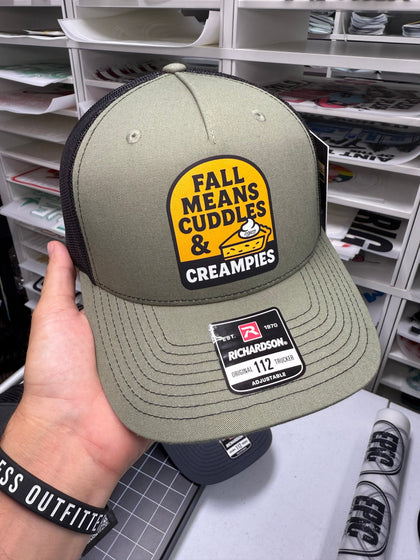
While Tecovas was selling $300 boots, a parallel ecosystem emerged at the opposite price point: print-on-demand country-graphic apparel. These brands — Luckless Outfitters, Punchy Cattle Co., Sassy Mae, Cowgirl Hardware Western Apparel, and dozens more — sell hoodies, tees, and trucker hats with country-rebel humor printed on Gildan, Bella + Canvas, AS Colour, and Independent Trading Co. blanks. The model is fundamentally different from heritage Western brands: small in-house design teams (3–10 people), domestic on-demand printing (Tennessee, Texas, North Carolina), Facebook live-selling as the primary channel, and a tag range that runs $25–$80 instead of $80–$300. Per the Specialty Graphic Imaging Association's 2024 industry report, US contract garment-decoration revenue exceeded $7.4B in 2023, with on-demand apparel accounting for the fastest-growing segment (estimated 18% YoY).
Why the 'y'alternative' label matters
Y'alternative — first popularized in the late 2010s on country-music TikTok and Reddit's r/AlternativeCountry — describes the aesthetic overlap between traditional country apparel (denim, Western boots, cowboy hats) and alt-rock/punk graphic-tee culture (skulls, dark humor, oversized fits, ironic catchphrases). The genre's wardrobe leans on visual pairs: sunflowers + skulls, faded camo + lace, pearl snaps + band shirts. Luckless Outfitters' catalog is a textbook example — the brand's two recurring icons are sunflowers and cattle skulls, reproduced across more than 100 SKUs. The Bitter Southerner magazine's 2023 essay on country-fashion subcultures used Luckless as one of its named case studies.
Domestic print partners: who actually makes these garments
The print-on-demand country-tee category runs on a small number of contract garment-decoration partners. The most-used domestic suppliers in 2026 are Apliiq (Los Angeles, founded 2010), Printful (Charlotte, North Carolina + several US fulfillment centers), Printify (network model with US partners), SwiftPOD (multi-state), and several private contract printers in Tennessee and Texas. Garment blanks are sourced from a similarly small set of wholesalers: Bella + Canvas (Los Angeles, vertically integrated, 100% sweatshop-free per their disclosures), AS Colour (New Zealand origin, US warehouse), Independent Trading Co. (heavyweight fleece, Vista CA), and Gildan (mass-market, Honduras manufacturing). Knowing which blank a country brand uses tells you almost everything about fit and weight before you buy.
Sizing: where country apparel diverges from fashion apparel
Country-apparel hoodies and tees are typically cut looser than fashion-apparel equivalents — a deliberate fit choice rooted in workwear ergonomics. A size large in Bella + Canvas 3001 (the standard fashion-tee blank) measures 22 inches across the chest; a size large in Gildan 18500 (standard country-hoodie blank) measures 24 inches and runs roughly two inches longer in the body. The size-up convention common in streetwear (one size up from your normal) usually does not apply to country apparel. Per Bella + Canvas's published sizing guide and Gildan's spec sheets, the two blanks fit at least one full size differently. Always check whether a country brand's product page specifies which blank it's printed on.
Print methods: DTG vs. screen vs. all-over
Three print methods dominate the category: direct-to-garment (DTG) uses inkjet technology to apply pigment directly to the fabric, ideal for full-color photo-style graphics on small runs; screen printing uses stenciled mesh and pushes plastisol or water-based ink through one screen per color, ideal for two-to-six-color graphics on production runs of 50+; all-over print (AOP) uses dye-sublimation on polyester or polyester-blend fabric and produces edge-to-edge graphics. Luckless's faded-camo wide-string hoodie is an AOP piece (printed on a recycled polyester blank); the Look-Pretty-Play-Dirty hoodie is screen-printed. The two methods have different wash-care requirements: AOP can be machine-washed cold and tumble-dried low; screen-printed plastisol cracks if dried hot.
Where country apparel sits in 2026
The category is bigger and more diverse than ever. On the heritage end, brands like Tecovas (boots, $300M+ valuation), Lucchese (boots, founded 1883), Stetson (hats, founded 1865), Wrangler (denim, founded 1947), and Kemo Sabe (Aspen-based luxury Western retailer) sell to country-music adopters at full luxury prices. On the print-on-demand end, brands like Luckless Outfitters, Punchy Cattle Co., and Sassy Mae sell to the same cultural audience at $25–$80 price points with humor-led graphic tees. Both segments are growing — per Statista's 2025 US apparel category report, 'Western-influenced casual apparel' grew approximately 12% YoY in 2024. The y'alternative graphic-tee end of the market — Luckless's specific niche — is the fastest-growing sub-category.
Bottom line for buyers
Country-inspired apparel in 2026 is a layered category: heritage workwear at the top, festival-fashion in the middle, print-on-demand graphic tees at the base. Knowing which tier you're shopping changes the calculus. Heritage Western (boots, hats, denim) is a furniture-grade purchase — you're buying a piece that lasts a decade and ages well. Print-on-demand graphic tees (Luckless's category) are the country-genre's t-shirt economy: low-stakes, high-personality, designed for laughs and recognition more than longevity. Both are valid; both serve their audience. Just don't conflate them when you're budgeting — a $48 Luckless hoodie isn't pretending to be a $300 Tecovas shearling.
Discover more from Luckless Outfitters or browse the full Luckless Outfitters collection.
Frequently asked
What does "Country-Inspired Apparel, Decoded: From Coal-Field Workwear to the Y'Alternative Graphic Tee" cover?
This piece walks through the topic, context, and practical implications laid out in the article body above — focused on giving you a clear, sourced read rather than a quick listicle. Use it to deepen your understanding of the brand, category, or product family discussed.
Who is this article written for?
Readers shopping the brand or category covered, plus curious browsers researching independent makers stocked at Curated Sense. Both casual shoppers and trade buyers will find the same source-linked perspective.
How does Curated Sense vet the brands featured in journal articles?
Every brand in our journal has been onboarded directly: live inventory sync with the brand's own catalog, links back to the maker's own .com, and quality checks against return-rate, fulfillment-time, and customer-message-volume thresholds. We don't run sponsored placements in our journals.
Where can I shop the products discussed in this article?
Open the brand's collection or sub-collection page linked above to see current stock. Each product card opens a full Curated Sense product page with sizing, materials, the maker's own description, and the brand's live shipping policy.