Authentic Turquoise Jewelry: How to Spot Real vs. Fake
Turquoise is one of the oldest gemstones traded in North America — worn by Navajo silversmiths for over a century and prized across the Southwest for its distinctive sky-and-earth coloring. It's also one of the most frequently faked materials in the jewelry market. Here's a practical guide to knowing what you're actually buying.
The Four Tiers of Turquoise
1. Natural / Genuine Turquoise
Mined, cut, and set with no chemical treatment beyond cleaning. Color comes entirely from copper and iron in the host rock matrix. True natural turquoise is rare and commands premium prices — often $100–$400+ per piece for quality material. The matrix (web-like veining) is a good sign: it's hard to fake convincingly.
2. Stabilized Turquoise
Real turquoise that was too porous or soft for jewelry use without treatment. Resin is injected under vacuum to harden it. Stabilized stone is still genuine turquoise — it's the industry standard for most commercial jewelry and is perfectly legitimate when disclosed. Wild Junkie's jewelry is sourced with this transparency.
3. Treated / Enhanced Turquoise
Natural stone with color-enhancing dye or wax added. The color can fade over time with skin contact or cleaning. Reputable sellers disclose treatment; watch for unusually uniform, saturated blue with no matrix variation.
4. Simulated Turquoise
No turquoise at all. Common fakes include dyed howlite (chalky white stone), dyed magnesite, or plastic. These are sold legally only when labeled correctly — "turquoise-color" or "turquoise-style." Problems arise when they're sold as genuine.
How to Test at Home
- Acetone test: Rub a cotton swab dipped in acetone on an inconspicuous spot. Dye will transfer to the swab; genuine or stabilized turquoise won't.
- Matrix variation: Real turquoise has natural, irregular matrix veining. Too-perfect, evenly spaced "webbing" is usually printed or molded.
- Temperature: Genuine stone feels cool; plastic and resin warm to body temperature quickly.
- Weight: Stone is heavier than plastic or foam composites. Hold two pieces of similar size — the heavier one is more likely real.
- Price check: If a "turquoise" necklace is under $15, it's almost certainly howlite or plastic. Genuine stabilized turquoise has material costs that price can't hide.
Wild Junkie's Sourcing Approach
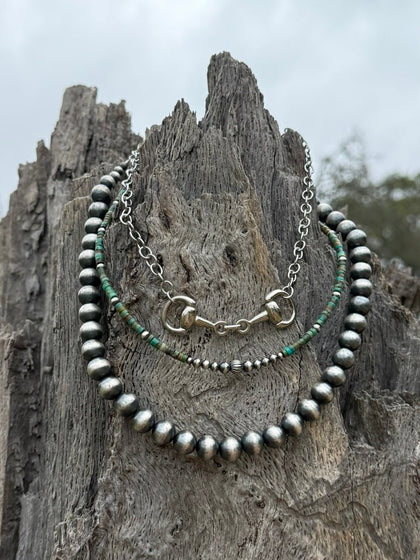
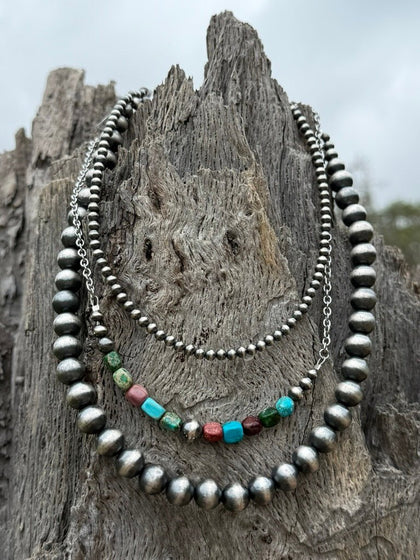
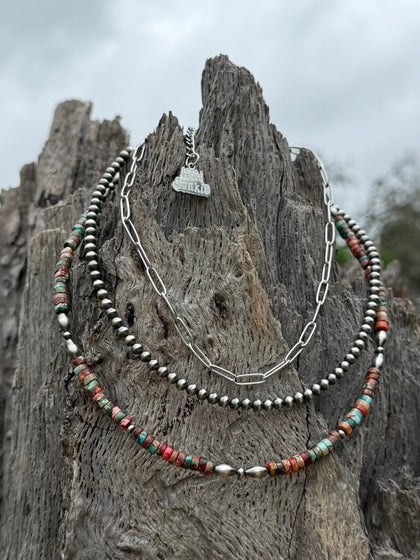
Wild Junkie carries three tiers of turquoise jewelry: their standard turquoise line (stabilized, clearly priced), German silver settings (a nickel-based alloy traditional in Southwestern jewelry, distinct from sterling), and Native Made Silversmith pieces — handcrafted by Native American artisans whose pieces carry provenance documentation and command the highest price points.
When you buy the Native Made tier, you're purchasing a piece with a specific maker behind it — not a factory production line.
Caring for Your Turquoise
Turquoise is porous and relatively soft (5–6 on the Mohs scale). Keep it away from perfumes, lotions, and prolonged water exposure. Store in a cloth pouch away from harder stones that can scratch it. For stabilized pieces, gentle dry polishing with a soft cloth is all you need.
Bottom Line
Authentic turquoise jewelry is an investment in a stone with real geological and cultural history. Ask sellers directly about treatment type, origin, and whether the metalwork is genuine silver or silver-plated. Legitimate sellers welcome those questions.
Browse Wild Junkie authentic turquoise necklaces, bracelets & Native Made Silversmith pieces →
Discover more from Wild Junkie or browse the full Wild Junkie collection.
Frequently asked
What does "Authentic Turquoise Jewelry: How to Spot Real vs. Fake" cover?
This piece walks through the topic, context, and practical implications laid out in the article body above — focused on giving you a clear, sourced read rather than a quick listicle. Use it to deepen your understanding of the brand, category, or product family discussed.
Who is this article written for?
Readers shopping the brand or category covered, plus curious browsers researching independent makers stocked at Curated Sense. Both casual shoppers and trade buyers will find the same source-linked perspective.
How does Curated Sense vet the brands featured in journal articles?
Every brand in our journal has been onboarded directly: live inventory sync with the brand's own catalog, links back to the maker's own .com, and quality checks against return-rate, fulfillment-time, and customer-message-volume thresholds. We don't run sponsored placements in our journals.
Where can I shop the products discussed in this article?
Open the brand's collection or sub-collection page linked above to see current stock. Each product card opens a full Curated Sense product page with sizing, materials, the maker's own description, and the brand's live shipping policy.