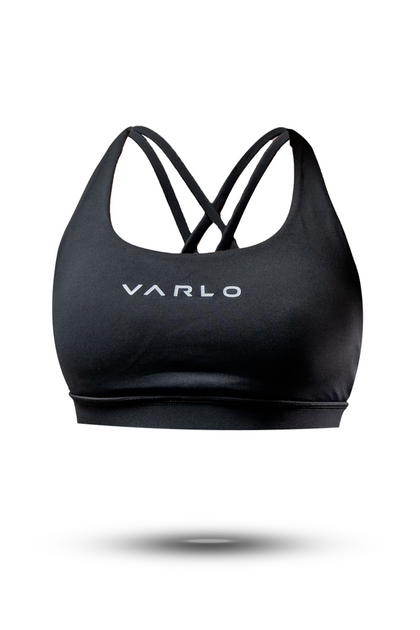
Sports bra strap configuration matters more than most buyers realize. Cross-back, racerback, and adjustable-strap aren't aesthetic choices — each performs differently during high-impact movement. Here's the 2026 construction guide for choosing the right configuration for your actual training.
What strap configuration actually does
A sports bra has two structural jobs: hold breast tissue stable during movement (reducing breast pain + Cooper's ligament damage that compounds over years), and stay in place on the torso through full-range motion. Strap configuration is the single biggest factor in whether the bra accomplishes both.
A 2018 study by the Sport and Exercise Science Research Centre at Portsmouth University tracked breast displacement during running across 75 women in three sports bra configurations. Cross-back configurations reduced breast displacement by 12-18% compared to standard racerback at the same compression level; adjustable-strap performed in between (depending on tightness). The mechanism: cross-back distributes load across the trapezius + deltoid muscles rather than concentrating at the strap origins.
For high-impact training (running, plyometric, dance, kettlebell flow, deep squats), this matters. For low-impact (walking, yoga, pilates), it matters less. The strap configuration should match the actual workout intensity.
Cross-back configuration
Cross-back has the straps cross at the upper back, typically between the shoulder blades. The crossing point becomes a load-bearing junction that distributes pressure across the trapezius muscles. Best for high-impact training because the bra stays in place even during burpees, deep squats, and explosive movements where the upper torso rotates.
The Varlo SOHO Cross-Back Sports Bra (Lime Lush, City Mocha, Black colorways) uses cross-back with mesh paneling at the side seams for breathability. The cross-back doesn't need to be tightened/loosened mid-workout the way an adjustable-strap might.
Trade-off: cross-back is harder to put on and remove than racerback. The crossing point requires you to step into the bra rather than pulling it overhead. For most training contexts, this is a 5-second difference; for some high-impact contexts, the security gain is worth it.
Racerback configuration
Racerback has straps that converge at the upper back into a Y-shape, pulling tension toward the center of the back. The configuration was originally designed for swimming (1980s-90s) and migrated to running/training in the 2000s. Best for moderate-impact + medium-impact training where you want the freedom of arm motion that racerback gives.
Racerback excels at: shoulder mobility (no straps in the armpit area), heat dissipation (open back design lets air flow), aesthetic versatility (visible under tank tops in studio contexts).
Trade-off: at high-impact intensity, racerback can shift forward as the arms swing. The shift is typically 1-3 inches over a 30-minute run; not a disaster but noticeable. Cross-back stays put.
Cross-back stays. Racerback breathes. Adjustable-strap compromises. Pick by workout, not by aesthetic.
Adjustable-strap configuration
Adjustable-strap is the traditional bra-style configuration — straight straps with adjustable hardware (typically a slide-buckle or hook system). Best for training contexts where you want to dial-in the fit between sessions or where your body composition changes (pregnancy, post-pregnancy, weight fluctuation).
Adjustable-strap excels at: customization (each strap can be set to different tensions), longevity (you can compensate for fabric stretch over time), versatility across body changes.
Trade-off: more failure points (the hardware can wear out), the straps can dig into shoulders if not adjusted properly, and the configuration doesn't distribute load as evenly as cross-back during high-impact movement. Most performance brands have moved away from adjustable for high-impact contexts; it remains common in low-impact + lifestyle bras.
What to choose for what training context
For running, plyometric, kettlebell flow, dance fitness, HIIT: cross-back. The breast displacement reduction matters at high impact intensity.
For yoga (Vinyasa, Power, Bikram), pilates studio, barre: cross-back or racerback both work. Cross-back if you want maximum stability during balance poses; racerback if you want shoulder mobility.
For walking, low-impact cardio, casual cardio: any configuration. The impact intensity doesn't test the structural difference enough to matter.
For pregnancy/post-pregnancy: adjustable-strap. Body changes during these phases benefit from the customization.
What Varlo specifically uses
The Varlo SOHO line uses cross-back exclusively for sports bras + crop tanks. The brand position is high-impact training-first; cross-back is the right configuration for that use case.
Six SOHO cross-back colorways currently: Lime Lush, City Mocha, Black, Lilac Mist, Neo Blue, Purple Muse. Each uses the same cross-back construction with mesh paneling and engineered compression weave.
Pricing for SOHO cross-back is in the $48-78 range, comparable to Lululemon Energy Bra ($58) and Athleta Conscious Crop ($59). The construction quality is comparable to those brands; the boutique-fit pattern grading (each size individually drafted) is the differentiator.
Quick answers
Why are cross-back sports bras harder to put on?
The crossing point at the upper back requires you to step into the bra rather than pulling it overhead. For racerback or adjustable-strap, you can pull it on overhead. The 5-second difference in putting on is the trade-off for the security gain during high-impact movement.
Can I wear a cross-back sports bra under a regular t-shirt?
Yes — the cross-back point is hidden under most t-shirts. For tank tops and racerback tops, the cross-back may be visible at the upper back, which some wearers consider a styling feature rather than a problem.
Does cross-back work for larger cup sizes?
Yes — cross-back is generally better for larger cup sizes than racerback because the load distribution across the trapezius reduces the strap pressure on the shoulders. Most performance brands recommend cross-back at C-cup and above for high-impact training.
How long does a sports bra last?
Properly cared for: 30-50 wash cycles before noticeable elastic degradation. The fabric stretch is the limiting factor; once compression decreases by ~25%, the bra needs replacement. For high-frequency users (4+ workouts per week), expect 12-18 months of life. Rotating 2-3 sports bras extends lifespan to 18-30 months.
Should I machine-wash sports bras?
Cold wash, gentle cycle, mesh laundry bag (prevents tangle damage), inside-out. Tumble dry low or hang dry. No fabric softener (degrades the spandex). High-heat drying breaks down the elastic significantly faster than cold-wash + low-dry. Rotating multiple bras lets you wash less frequently per piece, which extends life.
Shop SOHO cross-back sports bras + tanks
Cross-back sports bras + cross-back crop tanks. Built-in support, mesh paneling, technical fabric, six SOHO colorways.
Sources & citations
- Sport and Exercise Science Research Centre, Portsmouth University. "Breast Displacement During Running — Sports Bra Configuration Study." 2018. researchportal.port.ac.uk
- Journal of Applied Biomechanics. "Sports Bra Construction and Breast Movement: A 2024 Review." journals.humankinetics.com
- AATCC. "Compression Garment Testing Standards." aatcc.org
- Wirecutter (NYT). "The Best Sports Bras — High-Impact and Low-Impact Tested." nytimes.com/wirecutter
- Council of Fashion Designers of America. "Performance Apparel Construction Standards." cfda.com
All sports bras + tanks
The full Varlo training collection at Curated Sense. SOHO + Terra Recovery, engineered for actual movement.
All sports bras + tanks →Discover more from Varlo or browse the full Varlo collection.