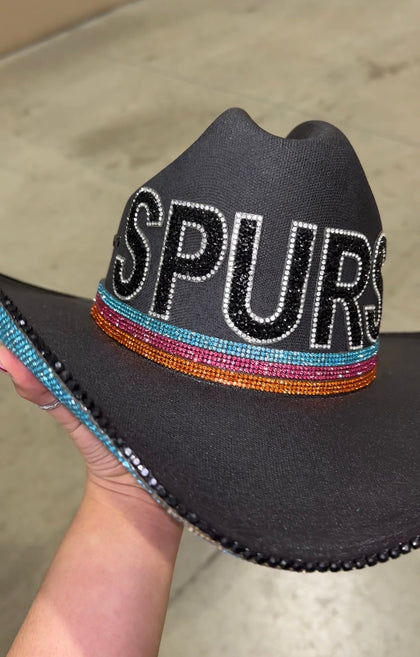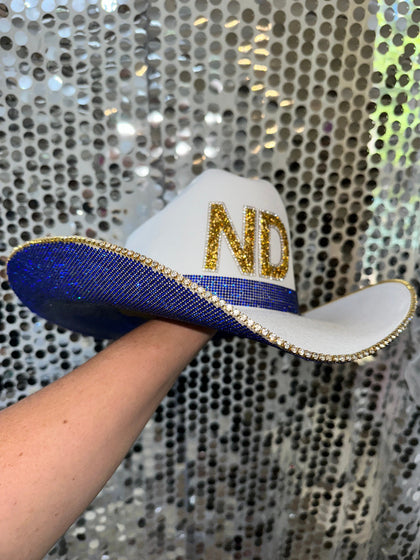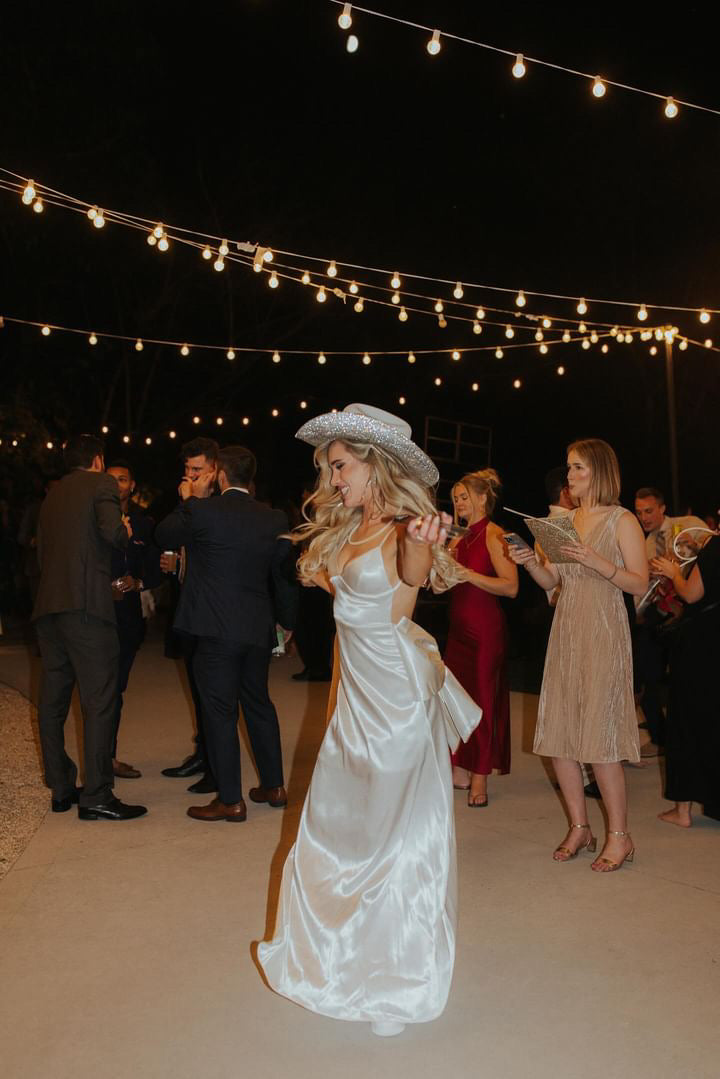
The crystals on a Rhinestone Cowgirl hat are direct descendants of a 1730s Czech-glass invention. The name 'rhinestone' itself comes from the Rhine River. Here's the three-century supply chain that ends at a Goodlettsville studio bench.
1730s: The original 'rhinestone' was actually rock crystal
The original rhinestones were rock-crystal pebbles found in the Rhine River in the 1700s. Cut and polished, they had a high enough refractive index to imitate diamonds at distance. Eighteenth-century jewelers used them as inexpensive substitutes in costume jewelry across Central Europe.
By the 1750s, supply was exhausted (Rhine-bed pebbles aren't a renewable resource), and the trade shifted to manufactured glass equivalents — leaded glass cut into small faceted shapes. Czech glassworks in Bohemia became the primary supplier. The name 'rhinestone' carried over from the natural-crystal era to the manufactured-glass era and stuck.
1900–1950: Mass-production and Hollywood
In 1892, Daniel Swarovski (a Czech inventor) patented an automated crystal-cutting machine that produced uniform faceted glass at industrial scale. Swarovski opened a factory in Wattens, Austria in 1895, which is still operating. The Swarovski crystal became the global standard for rhinestone work — uniform refractive index, consistent dimensions, durable surface.
Through the 1930s and 1940s, rhinestones moved from costume-jewelry into mainstream fashion via Hollywood. Singing-cowboy films of the era (Roy Rogers, Gene Autry) made rhinestone-encrusted Western wear iconic. Nudie's Rodeo Tailors of North Hollywood (founded 1947) used Czech-Austrian rhinestones extensively on the suits Elvis Presley, Hank Williams, and Roy Rogers wore on stage.
1990s: Heat-set adhesive changes the game
Until the 1990s, rhinestones were typically prong-set or sewn onto fabric — both labor-intensive techniques that limited the material to high-end couture. The 1990s saw the introduction of heat-set rhinestone adhesives — small dots of thermoplastic glue pre-applied to the back of each crystal that activate when heated to 280°F.
Heat-set adhesive made rhinestone-decorating accessible to non-couture-trained craftspeople with a basic iron or hand-press tool. The hand-set rhinestone-decorating cottage industry exploded in the 2000s and 2010s, particularly in Tennessee, Texas, and Nashville-area studios.
How a Rhinestone Cowgirl hat actually gets built
Each hat starts as a base from one of three Texas-based hat-makers (felt, straw, or denim — the brand's primary suppliers). The hat is steamed and shaped, then cleaned to remove any oils. The team designs the rhinestone pattern (in CAD-style software for custom orders, or from a stock template for standard team designs), prints a placement guide, and transfers the pattern to the hat.
The hand-setting work happens stone by stone with a heat-tool similar to a small soldering iron. Each crystal is picked up with a wax-tipped pickup tool, positioned on the placement guide, and heat-pressed for 3–5 seconds to activate the adhesive. A skilled setter places 200–400 stones per hour. A 2,000-stone hat takes 5–10 hours of total setting time spread across multiple sessions.
The crystals on Rhinestone Cowgirl's hats are sourced from a mix of Swarovski (for premium pieces) and Czech Preciosa (the second-largest rhinestone manufacturer, also Czech) for standard pieces. The brand publishes the crystal source on each product page when it differs from the default.
Shop the catalog
32 hand-set rhinestone hats across SEC, Big 12, ACC, and pro teams.
Sources & citations
- Swarovski company history. swarovski.com
- Preciosa Crystal Components history. preciosa.com
- Rosenthal, M. (2012). Western Wear and the American Cowboy. University of Oklahoma Press.
- V&A Museum textile archive — costume jewelry exhibition catalog (2018).
All hats
The full Rhinestone Cowgirl lineup at Curated Sense — hand-set in Nashville, ready to ship.
All hats →Discover more from Rhinestone Cowgirl or browse the full Rhinestone Cowgirl collection.
Frequently asked
What does "A Short History of the Rhinestone: From Czech Glass to SEC Tailgates" cover?
This piece walks through the topic, context, and practical implications laid out in the article body above — focused on giving you a clear, sourced read rather than a quick listicle. Use it to deepen your understanding of the brand, category, or product family discussed.
Who is this article written for?
Readers shopping the brand or category covered, plus curious browsers researching independent makers stocked at Curated Sense. Both casual shoppers and trade buyers will find the same source-linked perspective.
How does Curated Sense vet the brands featured in journal articles?
Every brand in our journal has been onboarded directly: live inventory sync with the brand's own catalog, links back to the maker's own .com, and quality checks against return-rate, fulfillment-time, and customer-message-volume thresholds. We don't run sponsored placements in our journals.
Where can I shop the products discussed in this article?
Open the brand's collection or sub-collection page linked above to see current stock. Each product card opens a full Curated Sense product page with sizing, materials, the maker's own description, and the brand's live shipping policy.